---
title: TRANSPORTATION MARKET UPDATE AUGUST- 2026 | AIR & SEA FREIGHT
description: Check our latest Transportation Market Updates - August- 2026
image: https://blog.asteelflash.com/hubfs/Methods%20of%20Transport%20Presentation.png
---
-
-
-
-
- [En](https://www.asteelflash.com/)
- [Fr](https://www.asteelflash.com/fr/)
[ ](https://www.asteelflash.com/)
Menu
- [Go-to Solution](https://www.asteelflash.com/go-to-solution/)
- [Design](https://www.asteelflash.com/solutions/design/)
- [Engineering](https://www.asteelflash.com/solutions/engineering/)
- [Intellectual property](https://www.asteelflash.com/solutions/intellectual-property/)
- [Prototyping](https://www.asteelflash.com/solutions/prototyping/)
- [New product introduction](https://www.asteelflash.com/solutions/new-product-introduction/)
- [Mass production](https://www.asteelflash.com/solutions/mass-production/)
- [Lifecycle management solutions](https://www.asteelflash.com/solutions/lifecycle-management-solutions/)
- [Smart supply chain](https://www.asteelflash.com/solutions/smart-supply-chain/)
- [Expertises](https://www.asteelflash.com/our-expertise/)
- [Aerospace](https://www.asteelflash.com/expertise/aerospace/)
- [Automotive](https://www.asteelflash.com/expertise/automotive/)
- [Consumer Electronics](https://www.asteelflash.com/expertise/consumer-electronics/)
- [Defense & Military](https://www.asteelflash.com/expertise/defense-and-military/)
- [Energy management](https://www.asteelflash.com/expertise/green-technologies/)
- [Industrial](https://www.asteelflash.com/expertise/industrial/)
- [Internet of things](https://www.asteelflash.com/expertise/internet-of-things/)
- [Medical](https://www.asteelflash.com/expertise/medical/)
- [Smart Home](https://www.asteelflash.com/expertise/smart-home/)
- [Smart Building](https://www.asteelflash.com/expertise/smart-building/)
- [Telecommunication](https://www.asteelflash.com/expertise/telecommunication/)
- [Wearables](https://www.asteelflash.com/expertise/wearables/)
- [Capabilities](https://www.asteelflash.com/our-capabilities/)
- [Design for Excellence (DfX)](https://www.asteelflash.com/capabilities/design-for-excellence-dfx/)
- [Printed circuit board assembly (PCBA)](https://www.asteelflash.com/capabilities/printed-circuit-board-assembly-pcba/)
- [Box Build](https://www.asteelflash.com/capabilities/box-build/)
- [System Integration](https://www.asteelflash.com/capabilities/system-integration/)
- [Value-added services](https://www.asteelflash.com/capabilities/value-added-services/)
- [Artificial Intelligence for Supply Chain](https://www.asteelflash.com/capabilities/artificial-intelligence-for-supply-chain/)
- [Smart Factory](https://www.asteelflash.com/capabilities/smart-factory/)
- [Startups](https://www.asteelflash.com/capabilities/startups/)
- Library
- [Case Studies](https://www.asteelflash.com/our-case-study/)
- [Electronic Manufacturing Services (EMS) 101](https://www.asteelflash.com/ems-101/)
- [What Design for Excellence Services Mean for PCBA?](https://www.asteelflash.com/what-design-for-excellence-services-mean-for-pcba/)
- [Not all PCBA services are equal — here’s why](https://www.asteelflash.com/not-all-pcba-services-are-equal-heres-why/)
- [Resources](https://www.asteelflash.com/resources/)
- [About us](https://www.asteelflash.com/about-us/)
- [Our blog](https://blog.asteelflash.com/blog)
- [Our Facilities](https://www.asteelflash.com/our-facilities/)
- [Our Locations](https://www.asteelflash.com/our-locations/)
- [Career](https://www.asteelflash.com/our-talents/)
- [Contact us](https://www.asteelflash.com/contact/)
- [En](https://www.asteelflash.com/)
- [Fr](https://www.asteelflash.com/fr/)
- [Go-to Solution](https://www.asteelflash.com/go-to-solution/)
- [Design](https://www.asteelflash.com/solutions/design/)
- [Engineering](https://www.asteelflash.com/solutions/engineering/)
- [Intellectual property](https://www.asteelflash.com/solutions/intellectual-property/)
- [Prototyping](https://www.asteelflash.com/solutions/prototyping/)
- [New product introduction](https://www.asteelflash.com/solutions/new-product-introduction/)
- [Mass production](https://www.asteelflash.com/solutions/mass-production/)
- [Lifecycle management solutions](https://www.asteelflash.com/solutions/lifecycle-management-solutions/)
- [Smart supply chain](https://www.asteelflash.com/solutions/smart-supply-chain/)
- [Expertises](https://www.asteelflash.com/our-expertise/)
- [Aerospace](https://www.asteelflash.com/expertise/aerospace/)
- [Automotive](https://www.asteelflash.com/expertise/automotive/)
- [Consumer Electronics](https://www.asteelflash.com/expertise/consumer-electronics/)
- [Defense & Military](https://www.asteelflash.com/expertise/defense-and-military/)
- [Green technologies](https://www.asteelflash.com/expertise/green-technologies/)
- [Industrial](https://www.asteelflash.com/expertise/industrial/)
- [Internet of things](https://www.asteelflash.com/expertise/internet-of-things/)
- [Medical](https://www.asteelflash.com/expertise/medical/)
- [Smart Home](https://www.asteelflash.com/expertise/smart-home/)
- [Smart Building](https://www.asteelflash.com/expertise/smart-building/)
- [Telecommunication](https://www.asteelflash.com/expertise/telecommunication/)
- [Wearables](https://www.asteelflash.com/expertise/wearables/)
- [Capabilities](https://www.asteelflash.com/our-capabilities/)
- [Design for Excellence (DfX)](https://www.asteelflash.com/capabilities/design-for-excellence-dfx/)
- [Printed circuit board assembly (PCBA)](https://www.asteelflash.com/capabilities/printed-circuit-board-assembly-pcba/)
- [Box Build](https://www.asteelflash.com/capabilities/box-build/)
- [System Integration](https://www.asteelflash.com/capabilities/system-integration/)
- [Value-added services](https://www.asteelflash.com/capabilities/value-added-services/)
- [Artificial Intelligence for Supply Chain](https://www.asteelflash.com/capabilities/artificial-intelligence-for-supply-chain/)
- [Smart Factory](https://www.asteelflash.com/capabilities/smart-factory/)
- [Startups](https://www.asteelflash.com/capabilities/startups/)
- Library
- [Value-Added Content](https://www.asteelflash.com/our-case-study/)
- [Electronic Manufacturing Services (EMS) 101](https://www.asteelflash.com/ems-101/)
- [Resources](https://www.asteelflash.com/resources/)
- [About us](https://www.asteelflash.com/about-us/)
- [Newsroom](https://www.asteelflash.com/our-newsroom/)
- [Facilities](https://www.asteelflash.com/our-facilities/)
- [Locations](https://www.asteelflash.com/our-locations/)
- [Talents](https://www.asteelflash.com/our-talents/)
- [Contact us](https://www.asteelflash.com/contact/)
👍
Type enter to search, or ESC to close the window
### Small suggestions
Aerospace, Automotive, Case studies, Facilities
# TRANSPORTATION MARKET UPDATE AUGUST- 2026 | AIR & SEA FREIGHT
##### Sep 8, 2026
[Back to our blog](https://blog.asteelflash.com/blog)
#### Share on :
[](http://www.facebook.com/share.php?u=https://blog.asteelflash.com/blog/transportation-market-update-august-2026-air-sea-freight) [](https://twitter.com/intent/tweet?original_referer=https://blog.asteelflash.com/blog/transportation-market-update-august-2026-air-sea-freight&url=https://blog.asteelflash.com/blog/transportation-market-update-august-2026-air-sea-freight&source=tweetbutton&text=) [](http://www.linkedin.com/shareArticle?mini=true&url=https://blog.asteelflash.com/blog/transportation-market-update-august-2026-air-sea-freight) [](mailto:?subject=Check%20out%20https://blog.asteelflash.com/blog/transportation-market-update-august-2026-air-sea-freight%20&body=Check%20out%20https://blog.asteelflash.com/blog/transportation-market-update-august-2026-air-sea-freight)
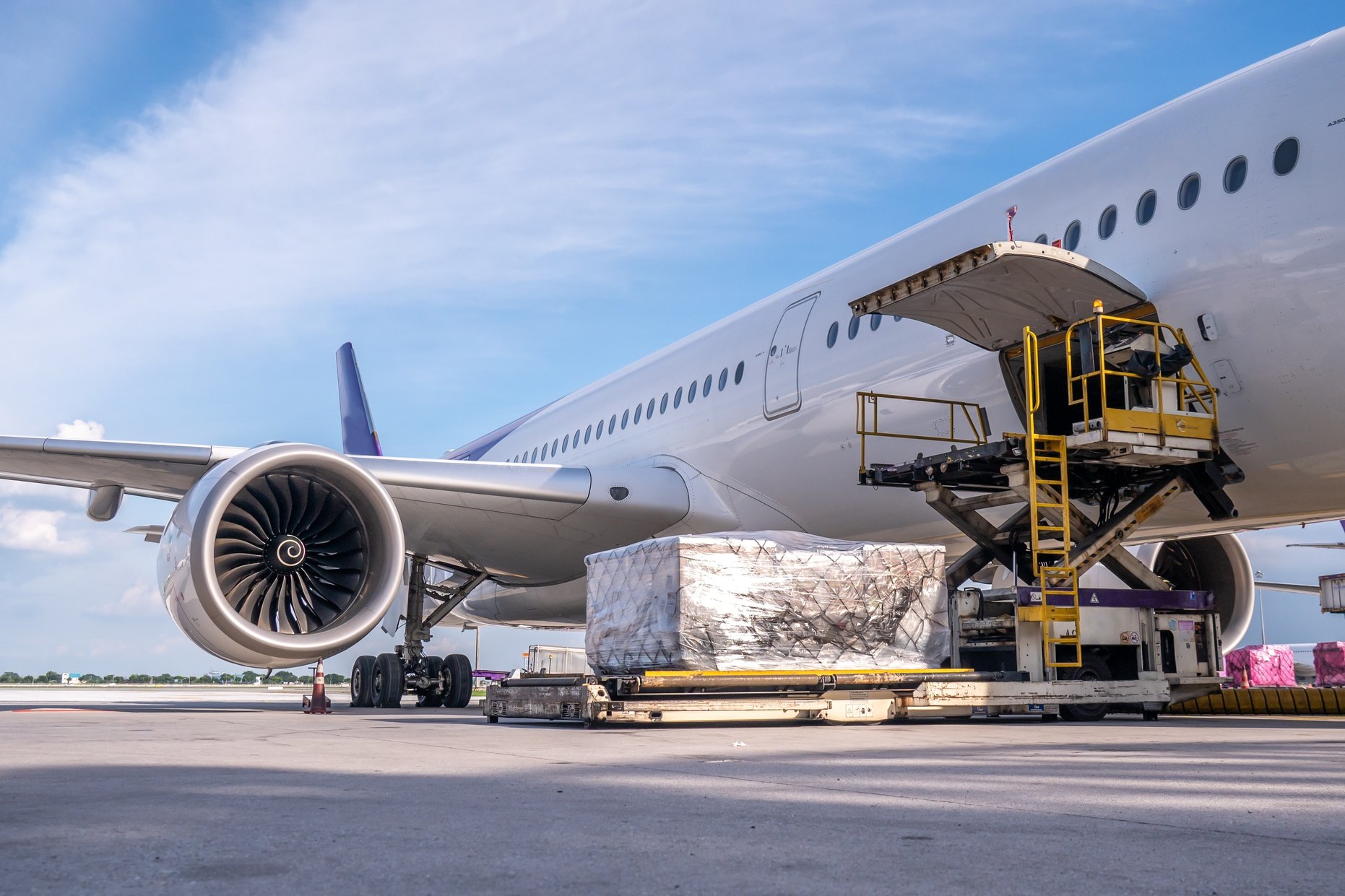
The Golden Week starts on October 1st in China.
Sea freight companies have already announced blank sailings; equipment is lacking in several major Chinese ports, and schedules are still disrupted by weather and congestion. In other words: what’s supposed to arrive at your place in November, December, and January needs to be booked now.
AIR FREIGHT
Equipment linked to next-generation AI server platforms is fueling airfreight demand from Japan, South Korea, Taiwan, Thailand, and Vietnam to Northern America.
The surging AI demand is putting pressure on capacity for other types of goods moving from, or through, these locations.
As these shipments are high-value, time-sensitive, and tied to deployment schedules, airfreight is expected to remain a preferred option for some shipments, even where ocean capacity is available.
Besides, air cargo tonnages from China and Hong Kong to Europe appear to have begun to stabilize.
Alongside the declines in tonnages from mainland China to Europe in the last two months, spot rates on that market decreased.
SEA FREIGHT
The global containership fleet has now reached almost 34 million TEU, 5.4% more than a year ago.
In theory, that should translate into greater supply.
In practice, carriers withdrew 10–15% of scheduled capacity on major east–west trades during the first half of 2026, compared with 6–8% in 2019.
Some of this is deliberate capacity management through blank sailings; some is the consequence of disruption.
Vessel waiting and dwelling time at ports – whether chronic or seasonal – continues to absorb a substantial share of effective fleet capacity.
A ship delayed outside a port, or spending longer than planned alongside, still exists in the statistics but cannot complete its next voyage as scheduled.
In fact, port congestion has broken the Covid record: on August 25, 4.3 million TEUs were waiting to dock worldwide, compared to 4 million at the peak in 2022.
North Asia accounted for half of that, after typhoons Bavi, Noul, Dolphin, Narra, and Saudel, with the average wait time in Shanghai jumping from 35 to 96 hours in just a week.
EUROPEAN PACKING NEW REGULATION
The EU packaging regulation entered into application on August 12th, replacing a framework that had governed the bloc since the 1990s.
For anyone moving consumer goods into Europe, this is worth reading carefully — because it introduces compliance obligations that attach to the packaging itself, not just to the product inside it or the entry paperwork that accompanies it.
What Applies Right Now: two obligations took effect immediately:
Practically speaking, that means the documentation trail behind your packaging needs to be as solid as the trail behind your goods.
The Deadlines Further Out: a standardized EU sorting label arrives in 2028, and the Commission plans to open a consultation on harmonized label design later this year.
The heavier obligations land in 2030: packaging must be recyclable in a way that is economically viable, certain single-use formats will be prohibited, reuse targets take effect, limits will apply to excess void space inside shipments, and deposit-return systems for cans and plastic bottles become mandatory.
The EU is targeting a 5% reduction in packaging waste by 2030 against a 2018 baseline, widening to 15% by 2040.
**EUROPE FUEL TAX 15%:** the ripple effect of the Hormuz crisis, combined with increasing cost of crude oil has a direct impact on trucking fuel taxes in Europe that have reached the highest point in years: up to 15% in August.
# Delivering quality and value for domestic appliances (2023 - Reshoring)
[Previous article](https://blog.asteelflash.com/blog/delivering-quality-and-value-for-domestic-appliances-0?hsLang=en)
# We can't wait to learn more about your project
[Contact us](https://www.asteelflash.com/contact/)
[Contact us](https://www.asteelflash.com/contact/)
### Newsletter
Sign up to Asteelflash News below
- [Go-to Solution](https://www.asteelflash.com/go-to-solution/)
- [Design](https://www.asteelflash.com/solutions/design/)
- [Engineering](https://www.asteelflash.com/solutions/engineering/)
- [Intellectual property](https://www.asteelflash.com/solutions/intellectual-property/)
- [Prototyping](https://www.asteelflash.com/solutions/prototyping/)
- [New product introduction](https://www.asteelflash.com/solutions/new-product-introduction/)
- [Mass production](https://www.asteelflash.com/solutions/mass-production/)
- [Lifecycle management solutions](https://www.asteelflash.com/solutions/lifecycle-management-solutions/)
- [Smart supply chain](https://www.asteelflash.com/solutions/smart-supply-chain/)
- [Expertises](https://www.asteelflash.com/our-expertise/)
- [Aerospace](https://www.asteelflash.com/expertise/aerospace/)
- [Automotive](https://www.asteelflash.com/expertise/automotive/)
- [Consumer Electronics](https://www.asteelflash.com/expertise/consumer-electronics/)
- [Defense & Military](https://www.asteelflash.com/expertise/defense-and-military/)
- [Energy management](https://www.asteelflash.com/expertise/green-technologies/)
- [Industrial](https://www.asteelflash.com/expertise/industrial/)
- [Internet of things](https://www.asteelflash.com/expertise/internet-of-things/)
- [Medical](https://www.asteelflash.com/expertise/medical/)
- [Smart Home](https://www.asteelflash.com/expertise/smart-home/)
- [Smart Building](https://www.asteelflash.com/expertise/smart-building/)
- [Telecommunication](https://www.asteelflash.com/expertise/telecommunication/)
- [Wearables](https://www.asteelflash.com/expertise/wearables/)
- [Capabilities](https://www.asteelflash.com/our-capabilities/)
- [Design for Excellence (DfX)](https://www.asteelflash.com/capabilities/design-for-excellence-dfx/)
- [Printed circuit board assembly (PCBA)](https://www.asteelflash.com/capabilities/printed-circuit-board-assembly-pcba/)
- [Box Build](https://www.asteelflash.com/capabilities/box-build/)
- [System Integration](https://www.asteelflash.com/capabilities/system-integration/)
- [Value-added services](https://www.asteelflash.com/capabilities/value-added-services/)
- [Artificial Intelligence for Supply Chain](https://www.asteelflash.com/capabilities/artificial-intelligence-for-supply-chain/)
- [Smart Factory](https://www.asteelflash.com/capabilities/smart-factory/)
- [Startups](https://www.asteelflash.com/capabilities/startups/)
- Library
- [Case Studies](https://www.asteelflash.com/our-case-study/)
- [Electronic Manufacturing Services (EMS) 101](https://www.asteelflash.com/ems-101/)
- [What Design for Excellence Services Mean for PCBA?](https://www.asteelflash.com/what-design-for-excellence-services-mean-for-pcba/)
- [Not all PCBA services are equal — here’s why](https://www.asteelflash.com/not-all-pcba-services-are-equal-heres-why/)
- [Resources](https://www.asteelflash.com/resources/)
- [About us](https://www.asteelflash.com/about-us/)
- [Our blog](https://blog.asteelflash.com/blog)
- [Our Facilities](https://www.asteelflash.com/our-facilities/)
- [Our Locations](https://www.asteelflash.com/our-locations/)
- [Career](https://www.asteelflash.com/our-talents/)
- [Contact us](https://www.asteelflash.com/contact/)
All rights reserved.
[Legal notice](https://www.asteelflash.com/legal-notice/)
[Supply Intelligence Report Q2 – Asteelflash](https://www.asteelflash.com/casestudies/supply-intelligence-material-report-q2-2018/supply-intelligence-report-q2-asteelflash-2/)
-
-
-
-
- [En](https://www.asteelflash.com/)
- [Fr](https://www.asteelflash.com/fr/)