---
title: TRANSPORTATION MARKET UPDATE DECEMBER- 2025 | AIR & SEA FREIGHT
description: Check our latest Transportation Market Updates - December- 2025
image: https://blog.asteelflash.com/hubfs/Methods%20of%20Transport%20Presentation.png
---
-
-
-
-
- [En](https://www.asteelflash.com/)
- [Fr](https://www.asteelflash.com/fr/)
[ ](https://www.asteelflash.com/)
Menu
- [Go-to Solution](https://www.asteelflash.com/go-to-solution/)
- [Design](https://www.asteelflash.com/solutions/design/)
- [Engineering](https://www.asteelflash.com/solutions/engineering/)
- [Intellectual property](https://www.asteelflash.com/solutions/intellectual-property/)
- [Prototyping](https://www.asteelflash.com/solutions/prototyping/)
- [New product introduction](https://www.asteelflash.com/solutions/new-product-introduction/)
- [Mass production](https://www.asteelflash.com/solutions/mass-production/)
- [Lifecycle management solutions](https://www.asteelflash.com/solutions/lifecycle-management-solutions/)
- [Smart supply chain](https://www.asteelflash.com/solutions/smart-supply-chain/)
- [Expertises](https://www.asteelflash.com/our-expertise/)
- [Aerospace](https://www.asteelflash.com/expertise/aerospace/)
- [Automotive](https://www.asteelflash.com/expertise/automotive/)
- [Consumer Electronics](https://www.asteelflash.com/expertise/consumer-electronics/)
- [Defense & Military](https://www.asteelflash.com/expertise/defense-and-military/)
- [Energy management](https://www.asteelflash.com/expertise/green-technologies/)
- [Industrial](https://www.asteelflash.com/expertise/industrial/)
- [Internet of things](https://www.asteelflash.com/expertise/internet-of-things/)
- [Medical](https://www.asteelflash.com/expertise/medical/)
- [Smart Home](https://www.asteelflash.com/expertise/smart-home/)
- [Smart Building](https://www.asteelflash.com/expertise/smart-building/)
- [Telecommunication](https://www.asteelflash.com/expertise/telecommunication/)
- [Wearables](https://www.asteelflash.com/expertise/wearables/)
- [Capabilities](https://www.asteelflash.com/our-capabilities/)
- [Design for Excellence (DfX)](https://www.asteelflash.com/capabilities/design-for-excellence-dfx/)
- [Printed circuit board assembly (PCBA)](https://www.asteelflash.com/capabilities/printed-circuit-board-assembly-pcba/)
- [Box Build](https://www.asteelflash.com/capabilities/box-build/)
- [System Integration](https://www.asteelflash.com/capabilities/system-integration/)
- [Value-added services](https://www.asteelflash.com/capabilities/value-added-services/)
- [Artificial Intelligence for Supply Chain](https://www.asteelflash.com/capabilities/artificial-intelligence-for-supply-chain/)
- [Smart Factory](https://www.asteelflash.com/capabilities/smart-factory/)
- [Startups](https://www.asteelflash.com/capabilities/startups/)
- Library
- [Case Studies](https://www.asteelflash.com/our-case-study/)
- [Electronic Manufacturing Services (EMS) 101](https://www.asteelflash.com/ems-101/)
- [What Design for Excellence Services Mean for PCBA?](https://www.asteelflash.com/what-design-for-excellence-services-mean-for-pcba/)
- [Not all PCBA services are equal — here’s why](https://www.asteelflash.com/not-all-pcba-services-are-equal-heres-why/)
- [Resources](https://www.asteelflash.com/resources/)
- [About us](https://www.asteelflash.com/about-us/)
- [Our blog](https://blog.asteelflash.com/blog)
- [Our Facilities](https://www.asteelflash.com/our-facilities/)
- [Our Locations](https://www.asteelflash.com/our-locations/)
- [Career](https://www.asteelflash.com/our-talents/)
- [Contact us](https://www.asteelflash.com/contact/)
- [En](https://www.asteelflash.com/)
- [Fr](https://www.asteelflash.com/fr/)
- [Go-to Solution](https://www.asteelflash.com/go-to-solution/)
- [Design](https://www.asteelflash.com/solutions/design/)
- [Engineering](https://www.asteelflash.com/solutions/engineering/)
- [Intellectual property](https://www.asteelflash.com/solutions/intellectual-property/)
- [Prototyping](https://www.asteelflash.com/solutions/prototyping/)
- [New product introduction](https://www.asteelflash.com/solutions/new-product-introduction/)
- [Mass production](https://www.asteelflash.com/solutions/mass-production/)
- [Lifecycle management solutions](https://www.asteelflash.com/solutions/lifecycle-management-solutions/)
- [Smart supply chain](https://www.asteelflash.com/solutions/smart-supply-chain/)
- [Expertises](https://www.asteelflash.com/our-expertise/)
- [Aerospace](https://www.asteelflash.com/expertise/aerospace/)
- [Automotive](https://www.asteelflash.com/expertise/automotive/)
- [Consumer Electronics](https://www.asteelflash.com/expertise/consumer-electronics/)
- [Defense & Military](https://www.asteelflash.com/expertise/defense-and-military/)
- [Green technologies](https://www.asteelflash.com/expertise/green-technologies/)
- [Industrial](https://www.asteelflash.com/expertise/industrial/)
- [Internet of things](https://www.asteelflash.com/expertise/internet-of-things/)
- [Medical](https://www.asteelflash.com/expertise/medical/)
- [Smart Home](https://www.asteelflash.com/expertise/smart-home/)
- [Smart Building](https://www.asteelflash.com/expertise/smart-building/)
- [Telecommunication](https://www.asteelflash.com/expertise/telecommunication/)
- [Wearables](https://www.asteelflash.com/expertise/wearables/)
- [Capabilities](https://www.asteelflash.com/our-capabilities/)
- [Design for Excellence (DfX)](https://www.asteelflash.com/capabilities/design-for-excellence-dfx/)
- [Printed circuit board assembly (PCBA)](https://www.asteelflash.com/capabilities/printed-circuit-board-assembly-pcba/)
- [Box Build](https://www.asteelflash.com/capabilities/box-build/)
- [System Integration](https://www.asteelflash.com/capabilities/system-integration/)
- [Value-added services](https://www.asteelflash.com/capabilities/value-added-services/)
- [Artificial Intelligence for Supply Chain](https://www.asteelflash.com/capabilities/artificial-intelligence-for-supply-chain/)
- [Smart Factory](https://www.asteelflash.com/capabilities/smart-factory/)
- [Startups](https://www.asteelflash.com/capabilities/startups/)
- Library
- [Value-Added Content](https://www.asteelflash.com/our-case-study/)
- [Electronic Manufacturing Services (EMS) 101](https://www.asteelflash.com/ems-101/)
- [Resources](https://www.asteelflash.com/resources/)
- [About us](https://www.asteelflash.com/about-us/)
- [Newsroom](https://www.asteelflash.com/our-newsroom/)
- [Facilities](https://www.asteelflash.com/our-facilities/)
- [Locations](https://www.asteelflash.com/our-locations/)
- [Talents](https://www.asteelflash.com/our-talents/)
- [Contact us](https://www.asteelflash.com/contact/)
👍
Type enter to search, or ESC to close the window
### Small suggestions
Aerospace, Automotive, Case studies, Facilities
# TRANSPORTATION MARKET UPDATE DECEMBER- 2025 | AIR & SEA FREIGHT
##### Jan 7, 2026
[Back to our blog](https://blog.asteelflash.com/blog)
#### Share on :
[](http://www.facebook.com/share.php?u=https://blog.asteelflash.com/blog/transportation-market-update-december-2025-air-sea-freight) [](https://twitter.com/intent/tweet?original_referer=https://blog.asteelflash.com/blog/transportation-market-update-december-2025-air-sea-freight&url=https://blog.asteelflash.com/blog/transportation-market-update-december-2025-air-sea-freight&source=tweetbutton&text=) [](http://www.linkedin.com/shareArticle?mini=true&url=https://blog.asteelflash.com/blog/transportation-market-update-december-2025-air-sea-freight) [](mailto:?subject=Check%20out%20https://blog.asteelflash.com/blog/transportation-market-update-december-2025-air-sea-freight%20&body=Check%20out%20https://blog.asteelflash.com/blog/transportation-market-update-december-2025-air-sea-freight)
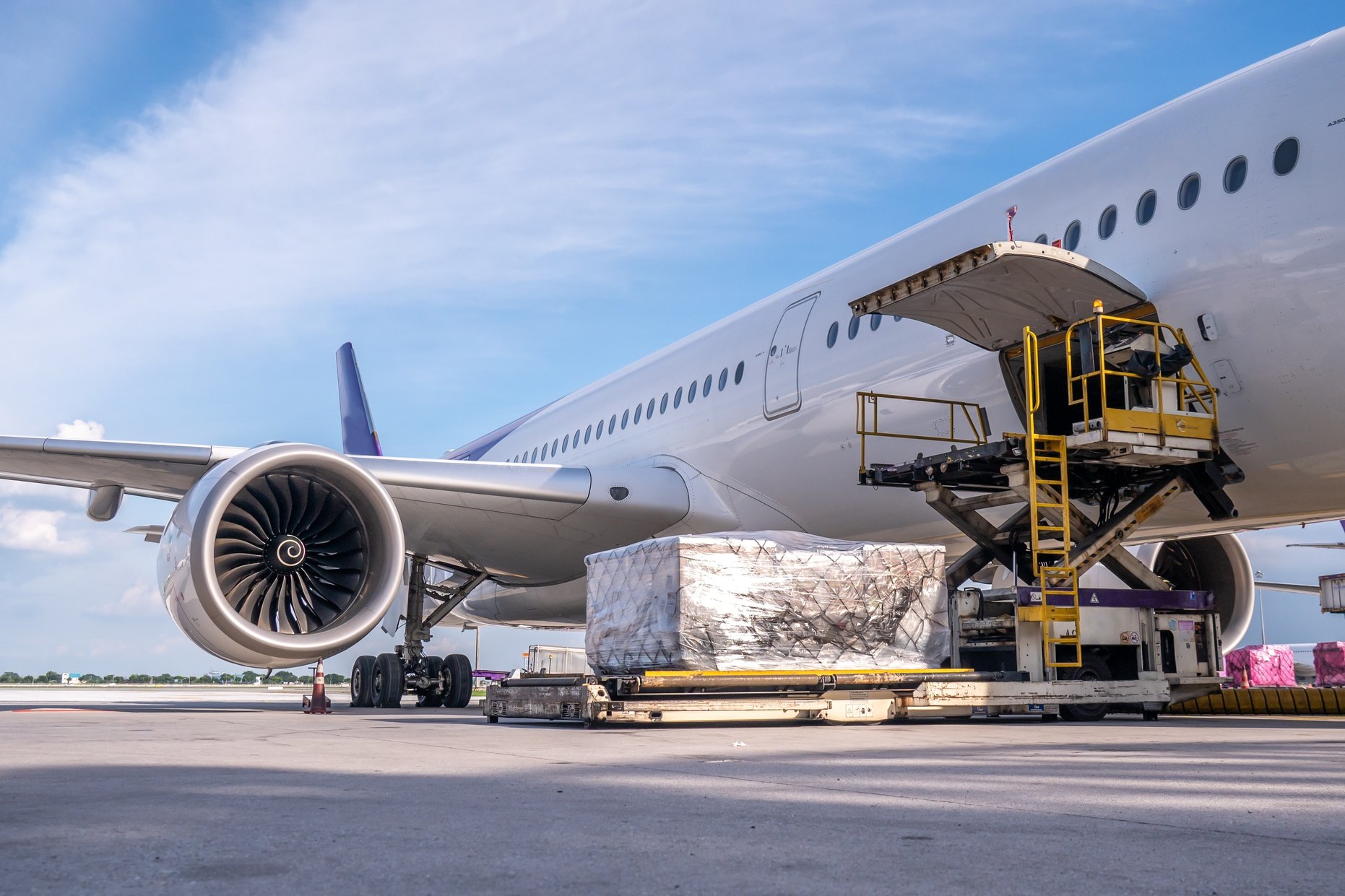
The 2026 global shipping market might be defined by a paradox: a record of 10M TEU’s of new sea freight capacity is set to pressure rates lower, while tariff barriers, energy risks, and geopolitical tensions are making supply chains more complex than ever.
This market update explores current trends in air and sea freight, taking into account the impact of evolving customs policies, trade disputes, and geopolitical uncertainties.
According to early 2026 outlooks, volatility will be the norm instead of the exception.
While tariff tensions have temporarily eased, the path ahead remains unsettled, as higher borrowing costs, shifting fiscal policies, and elevated geopolitical risks weigh on growth prospects.
AIR FREIGHT
Global international air cargo capacity grew by 6.5% YoY, driving spot rates down across major markets despite resilient demand fueled by AI investments and e-commerce.
Capacity and Rates: global international air cargo capacity increased by 6.5% in 2025 compared to 2024, resulting in spot rates declining year-over-year on all major global markets.
Demand Drivers: demand remains resilient, driven strongly by AI-related investments and persistent e-commerce activity.
Outlook: a potential shift from air back to ocean freight is expected in 2026 as ocean service levels will potentially improve and pressure will ease from tariff-related frontloading.
SEA FREIGHT
Geopolitical and policy risks have become bigger drivers of the ‘deteriorating’ 2026 outlook for the global shipping sector than underlying industry fundamentals.
These risks include potential tariff-related escalation; other protectionism-driven tensions such as port fees; the possible resumption of Red Sea transits; a potential conflict in Venezuela; and increasing competition for control of shipping value chains.
Container-shipping performance is expected to weaken in 2026, according to Global Shipping Outlook 2026, as lower freight rates resulting from a weakened supply-demand balance will lead to lower profits.
| Demand continues to build on Asia–Europe lanes and secondary trades, while U.S.–China flows soften under tariff pressure, with strong volumes expected into the Chinese New Year. |
| --- |
| Capacity remains tight despite ongoing fleet expansion, as operational bottlenecks, port congestion, and Suez detours limit actual availability. |
| Regulatory pressure is increasing as the EU ETS (the EU ETS aims to reduce greenhouse gas (GHG) emissions from energy-intensive industries, power generation, and both aviation and maritime transportation) moves toward full application in 2026, driving surcharges upward and pushing the industry toward greener solutions. |
Tender Management: the "billion-dollar question" for negotiations is the potential reopening of the Red Sea in 2026, which would instantly free up capacity but could simultaneously cause terminal congestion and surcharges in Europe due to the sudden influx of vessels.
It is certain that regulatory costs will rise in 2026, as the EU ETS carbon tax on shipping will reach 100% implementation (up from 70% in 2025), which will need to be incorporated into all ocean negotiations on cargo from and to EU countries.
# Medical Device Contract Manufacturing Best Practices
[Previous article](https://blog.asteelflash.com/blog/medical-device-contract-manufacturing-best-practices?hsLang=en)
# A Day in the Life of Hanna Dobbek- Procurement and Logistics Manager
[Next article](https://blog.asteelflash.com/blog/a-day-in-the-life-of-hanna-dobbek-procurement-and-logistics-manager?hsLang=en)
# We can't wait to learn more about your project
[Contact us](https://www.asteelflash.com/contact/)
[Contact us](https://www.asteelflash.com/contact/)
### Newsletter
Sign up to Asteelflash News below
- [Go-to Solution](https://www.asteelflash.com/go-to-solution/)
- [Design](https://www.asteelflash.com/solutions/design/)
- [Engineering](https://www.asteelflash.com/solutions/engineering/)
- [Intellectual property](https://www.asteelflash.com/solutions/intellectual-property/)
- [Prototyping](https://www.asteelflash.com/solutions/prototyping/)
- [New product introduction](https://www.asteelflash.com/solutions/new-product-introduction/)
- [Mass production](https://www.asteelflash.com/solutions/mass-production/)
- [Lifecycle management solutions](https://www.asteelflash.com/solutions/lifecycle-management-solutions/)
- [Smart supply chain](https://www.asteelflash.com/solutions/smart-supply-chain/)
- [Expertises](https://www.asteelflash.com/our-expertise/)
- [Aerospace](https://www.asteelflash.com/expertise/aerospace/)
- [Automotive](https://www.asteelflash.com/expertise/automotive/)
- [Consumer Electronics](https://www.asteelflash.com/expertise/consumer-electronics/)
- [Defense & Military](https://www.asteelflash.com/expertise/defense-and-military/)
- [Energy management](https://www.asteelflash.com/expertise/green-technologies/)
- [Industrial](https://www.asteelflash.com/expertise/industrial/)
- [Internet of things](https://www.asteelflash.com/expertise/internet-of-things/)
- [Medical](https://www.asteelflash.com/expertise/medical/)
- [Smart Home](https://www.asteelflash.com/expertise/smart-home/)
- [Smart Building](https://www.asteelflash.com/expertise/smart-building/)
- [Telecommunication](https://www.asteelflash.com/expertise/telecommunication/)
- [Wearables](https://www.asteelflash.com/expertise/wearables/)
- [Capabilities](https://www.asteelflash.com/our-capabilities/)
- [Design for Excellence (DfX)](https://www.asteelflash.com/capabilities/design-for-excellence-dfx/)
- [Printed circuit board assembly (PCBA)](https://www.asteelflash.com/capabilities/printed-circuit-board-assembly-pcba/)
- [Box Build](https://www.asteelflash.com/capabilities/box-build/)
- [System Integration](https://www.asteelflash.com/capabilities/system-integration/)
- [Value-added services](https://www.asteelflash.com/capabilities/value-added-services/)
- [Artificial Intelligence for Supply Chain](https://www.asteelflash.com/capabilities/artificial-intelligence-for-supply-chain/)
- [Smart Factory](https://www.asteelflash.com/capabilities/smart-factory/)
- [Startups](https://www.asteelflash.com/capabilities/startups/)
- Library
- [Case Studies](https://www.asteelflash.com/our-case-study/)
- [Electronic Manufacturing Services (EMS) 101](https://www.asteelflash.com/ems-101/)
- [What Design for Excellence Services Mean for PCBA?](https://www.asteelflash.com/what-design-for-excellence-services-mean-for-pcba/)
- [Not all PCBA services are equal — here’s why](https://www.asteelflash.com/not-all-pcba-services-are-equal-heres-why/)
- [Resources](https://www.asteelflash.com/resources/)
- [About us](https://www.asteelflash.com/about-us/)
- [Our blog](https://blog.asteelflash.com/blog)
- [Our Facilities](https://www.asteelflash.com/our-facilities/)
- [Our Locations](https://www.asteelflash.com/our-locations/)
- [Career](https://www.asteelflash.com/our-talents/)
- [Contact us](https://www.asteelflash.com/contact/)
All rights reserved.
[Legal notice](https://www.asteelflash.com/legal-notice/)
[Supply Intelligence Report Q2 – Asteelflash](https://www.asteelflash.com/casestudies/supply-intelligence-material-report-q2-2018/supply-intelligence-report-q2-asteelflash-2/)
-
-
-
-
- [En](https://www.asteelflash.com/)
- [Fr](https://www.asteelflash.com/fr/)