---
title: TRANSPORTATION MARKET UPDATE FEBRUARY- 2026 | AIR & SEA FREIGHT
description: Check our latest Transportation Market Updates - February- 2026
image: https://blog.asteelflash.com/hubfs/shutterstock_2459074877.jpg
---
-
-
-
-
- [En](https://www.asteelflash.com/)
- [Fr](https://www.asteelflash.com/fr/)
[ ](https://www.asteelflash.com/)
Menu
- [Go-to Solution](https://www.asteelflash.com/go-to-solution/)
- [Design](https://www.asteelflash.com/solutions/design/)
- [Engineering](https://www.asteelflash.com/solutions/engineering/)
- [Intellectual property](https://www.asteelflash.com/solutions/intellectual-property/)
- [Prototyping](https://www.asteelflash.com/solutions/prototyping/)
- [New product introduction](https://www.asteelflash.com/solutions/new-product-introduction/)
- [Mass production](https://www.asteelflash.com/solutions/mass-production/)
- [Lifecycle management solutions](https://www.asteelflash.com/solutions/lifecycle-management-solutions/)
- [Smart supply chain](https://www.asteelflash.com/solutions/smart-supply-chain/)
- [Expertises](https://www.asteelflash.com/our-expertise/)
- [Aerospace](https://www.asteelflash.com/expertise/aerospace/)
- [Automotive](https://www.asteelflash.com/expertise/automotive/)
- [Consumer Electronics](https://www.asteelflash.com/expertise/consumer-electronics/)
- [Defense & Military](https://www.asteelflash.com/expertise/defense-and-military/)
- [Energy management](https://www.asteelflash.com/expertise/green-technologies/)
- [Industrial](https://www.asteelflash.com/expertise/industrial/)
- [Internet of things](https://www.asteelflash.com/expertise/internet-of-things/)
- [Medical](https://www.asteelflash.com/expertise/medical/)
- [Smart Home](https://www.asteelflash.com/expertise/smart-home/)
- [Smart Building](https://www.asteelflash.com/expertise/smart-building/)
- [Telecommunication](https://www.asteelflash.com/expertise/telecommunication/)
- [Wearables](https://www.asteelflash.com/expertise/wearables/)
- [Capabilities](https://www.asteelflash.com/our-capabilities/)
- [Design for Excellence (DfX)](https://www.asteelflash.com/capabilities/design-for-excellence-dfx/)
- [Printed circuit board assembly (PCBA)](https://www.asteelflash.com/capabilities/printed-circuit-board-assembly-pcba/)
- [Box Build](https://www.asteelflash.com/capabilities/box-build/)
- [System Integration](https://www.asteelflash.com/capabilities/system-integration/)
- [Value-added services](https://www.asteelflash.com/capabilities/value-added-services/)
- [Artificial Intelligence for Supply Chain](https://www.asteelflash.com/capabilities/artificial-intelligence-for-supply-chain/)
- [Smart Factory](https://www.asteelflash.com/capabilities/smart-factory/)
- [Startups](https://www.asteelflash.com/capabilities/startups/)
- Library
- [Case Studies](https://www.asteelflash.com/our-case-study/)
- [Electronic Manufacturing Services (EMS) 101](https://www.asteelflash.com/ems-101/)
- [What Design for Excellence Services Mean for PCBA?](https://www.asteelflash.com/what-design-for-excellence-services-mean-for-pcba/)
- [Not all PCBA services are equal — here’s why](https://www.asteelflash.com/not-all-pcba-services-are-equal-heres-why/)
- [Resources](https://www.asteelflash.com/resources/)
- [About us](https://www.asteelflash.com/about-us/)
- [Our blog](https://blog.asteelflash.com/blog)
- [Our Facilities](https://www.asteelflash.com/our-facilities/)
- [Our Locations](https://www.asteelflash.com/our-locations/)
- [Career](https://www.asteelflash.com/our-talents/)
- [Contact us](https://www.asteelflash.com/contact/)
- [En](https://www.asteelflash.com/)
- [Fr](https://www.asteelflash.com/fr/)
- [Go-to Solution](https://www.asteelflash.com/go-to-solution/)
- [Design](https://www.asteelflash.com/solutions/design/)
- [Engineering](https://www.asteelflash.com/solutions/engineering/)
- [Intellectual property](https://www.asteelflash.com/solutions/intellectual-property/)
- [Prototyping](https://www.asteelflash.com/solutions/prototyping/)
- [New product introduction](https://www.asteelflash.com/solutions/new-product-introduction/)
- [Mass production](https://www.asteelflash.com/solutions/mass-production/)
- [Lifecycle management solutions](https://www.asteelflash.com/solutions/lifecycle-management-solutions/)
- [Smart supply chain](https://www.asteelflash.com/solutions/smart-supply-chain/)
- [Expertises](https://www.asteelflash.com/our-expertise/)
- [Aerospace](https://www.asteelflash.com/expertise/aerospace/)
- [Automotive](https://www.asteelflash.com/expertise/automotive/)
- [Consumer Electronics](https://www.asteelflash.com/expertise/consumer-electronics/)
- [Defense & Military](https://www.asteelflash.com/expertise/defense-and-military/)
- [Green technologies](https://www.asteelflash.com/expertise/green-technologies/)
- [Industrial](https://www.asteelflash.com/expertise/industrial/)
- [Internet of things](https://www.asteelflash.com/expertise/internet-of-things/)
- [Medical](https://www.asteelflash.com/expertise/medical/)
- [Smart Home](https://www.asteelflash.com/expertise/smart-home/)
- [Smart Building](https://www.asteelflash.com/expertise/smart-building/)
- [Telecommunication](https://www.asteelflash.com/expertise/telecommunication/)
- [Wearables](https://www.asteelflash.com/expertise/wearables/)
- [Capabilities](https://www.asteelflash.com/our-capabilities/)
- [Design for Excellence (DfX)](https://www.asteelflash.com/capabilities/design-for-excellence-dfx/)
- [Printed circuit board assembly (PCBA)](https://www.asteelflash.com/capabilities/printed-circuit-board-assembly-pcba/)
- [Box Build](https://www.asteelflash.com/capabilities/box-build/)
- [System Integration](https://www.asteelflash.com/capabilities/system-integration/)
- [Value-added services](https://www.asteelflash.com/capabilities/value-added-services/)
- [Artificial Intelligence for Supply Chain](https://www.asteelflash.com/capabilities/artificial-intelligence-for-supply-chain/)
- [Smart Factory](https://www.asteelflash.com/capabilities/smart-factory/)
- [Startups](https://www.asteelflash.com/capabilities/startups/)
- Library
- [Value-Added Content](https://www.asteelflash.com/our-case-study/)
- [Electronic Manufacturing Services (EMS) 101](https://www.asteelflash.com/ems-101/)
- [Resources](https://www.asteelflash.com/resources/)
- [About us](https://www.asteelflash.com/about-us/)
- [Newsroom](https://www.asteelflash.com/our-newsroom/)
- [Facilities](https://www.asteelflash.com/our-facilities/)
- [Locations](https://www.asteelflash.com/our-locations/)
- [Talents](https://www.asteelflash.com/our-talents/)
- [Contact us](https://www.asteelflash.com/contact/)
👍
Type enter to search, or ESC to close the window
### Small suggestions
Aerospace, Automotive, Case studies, Facilities
# TRANSPORTATION MARKET UPDATE FEBRUARY- 2026 | AIR & SEA FREIGHT
##### Mar 4, 2026
[Back to our blog](https://blog.asteelflash.com/blog)
#### Share on :
[](http://www.facebook.com/share.php?u=https://blog.asteelflash.com/blog/transportation-market-update-february-2026-air-sea-freight) [](https://twitter.com/intent/tweet?original_referer=https://blog.asteelflash.com/blog/transportation-market-update-february-2026-air-sea-freight&url=https://blog.asteelflash.com/blog/transportation-market-update-february-2026-air-sea-freight&source=tweetbutton&text=) [](http://www.linkedin.com/shareArticle?mini=true&url=https://blog.asteelflash.com/blog/transportation-market-update-february-2026-air-sea-freight) [](mailto:?subject=Check%20out%20https://blog.asteelflash.com/blog/transportation-market-update-february-2026-air-sea-freight%20&body=Check%20out%20https://blog.asteelflash.com/blog/transportation-market-update-february-2026-air-sea-freight)
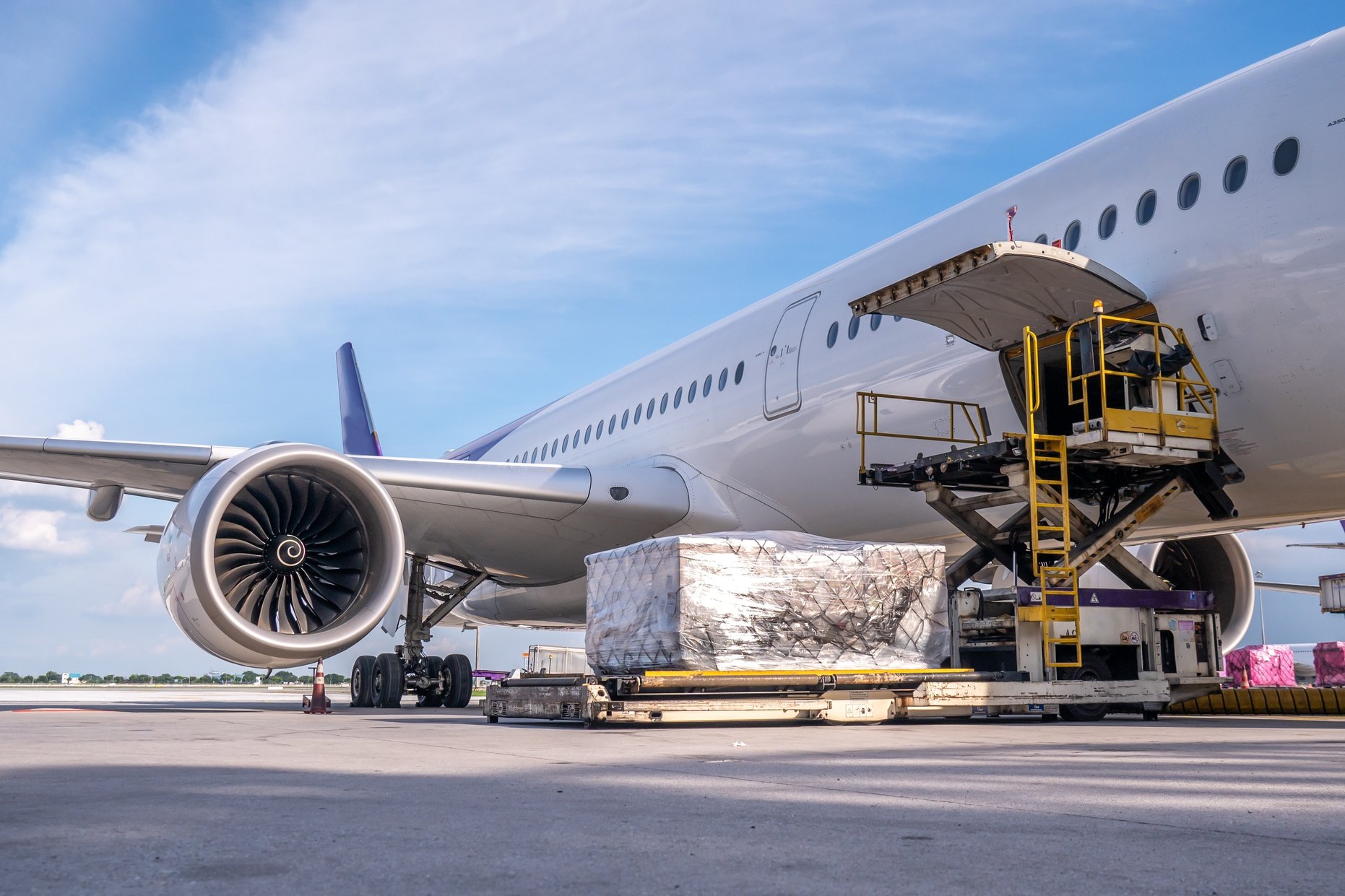
AIR FREIGHT
The conflict in the Middle East has put a stop to flights in and out of the region, with major operators declaring that air cargo operations are currently disrupted.
US and Israeli strikes on Iran prompted Iranian retaliation, triggering immediate airspace closures across the region.
Iran, Israel, Iraq, Jordan, Qatar, Bahrain, Kuwait, and the UAE have fully or partially shut down civilian airspace.
Syria remains restricted.
No reopening is announced for an unknown duration that could range from hours to several days, depending on de-escalation.
As a consequence, Middle East carriers—led by Emirates, Qatar Airways, and Etihad—handle roughly twenty-five to thirty percent of global air cargo volume annually, with Dubai, Doha, and Abu Dhabi serving as primary transit hubs.
Virtually all Asia-Europe, Asia-Africa, and intra-Gulf flows route through their airspace.
Closures cut this lifeline, removing critical belly and freighter lift overnight.
This stops both dedicated freighters and belly-hold capacity on passenger aircrafts.
Extra fuel burn (30-50%) reduces payload—meaning less cargo can be loaded per flight, even on surviving routes.
This will mean more freights will be offloaded and grounded.
Passenger carriers, which carry 40-60% of regional air freight, face widespread cancellations and delays.
Ground handling is halted: warehouses are backlogged, especially for perishables, pharmaceuticals, electronics, and e-commerce.
With Qatar and UAE airlines offline, Asia-Europe/Gulf lanes lose 20-30% of capacity short-term—compounded by payload cuts from fuel burn.
Immediate consequences to be expected are:
The disruption is not limited to traffic to and from the Middle East.
As Gulf hubs play a significant role in connecting Europe, Asia and the Indian Subcontinent, reduced connectivity is beginning to impact certain Asia–Europe and Asia–India lanes.
In the short to medium term, capacity constraints, rate volatility and extended transit times are expected.
SEA FREIGHT
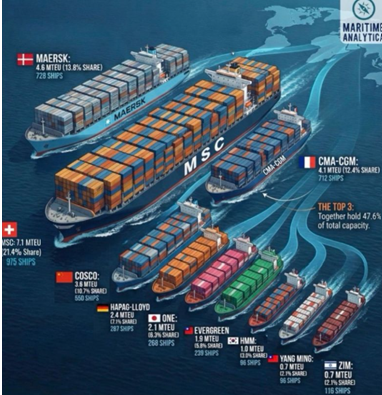
The geopolitical situation described above also has direct consequences on sea freight.
Following military action in the region, the Strait of Hormuz is currently closed to safe transit, resulting in the complete suspension of vessel movements into and out of the Arabian Gulf.
Additionally, major carriers have suspended transits through the Bab al Mandab Strait, leading to rerouting via the Cape of Good Hope and extending transit times across several global trade lanes.
Due to the rapidly evolving security situation, there may be periods of time where it is not possible to make and or confirm bookings for cargo destined for or originating from the affected areas.
The situation across the Middle East remains highly dynamic, with multiple ports and strategic waterways impacted:
The Strait of Hormuz is fully closed to all commercial container traffic, preventing direct access to the Arabian Gulf.
Major carriers have halted passage through the Bab el Mandeb Strait, forcing rerouting and significantly prolonging voyages.
ADDITIONAL TARIFF UNCERTAINTY
Following a few months of relative stability, fresh changes to the US tariff landscape look set to bring further uncertainty and volatility to markets, particularly for US-bound air cargo.
After the US Supreme Court this week ruled against the Trump administration’s International Emergency Economic Powers Act (IEEPA) tariffs, which it determined to be unlawful, President Trump implemented a temporary 10% global tariff (set to expire on 24 July), threatening to raise it to 15%.
Trump also issued an executive order that maintains the suspension of ‘de minimis’ exemptions, although new rules will apply to postal entries, which become subject to the 10% global tariff until it expires, or until US Customs establishes a new entry process for postal shipments.
It remains to be seen what the impact of these changes on air cargo flows will be.
# TRANSPORTATION MARKET UPDATE JANUARY- 2026 | AIR & SEA FREIGHT
[Previous article](https://blog.asteelflash.com/blog/transportation-market-update-january-2026-air-sea-freight?hsLang=en)
# TRANSPORTATION MARKET UPDATE MARCH 20TH- 2026 | AIR & SEA FREIGHT
[Next article](https://blog.asteelflash.com/blog/transportation-market-update-march-20th-2026-air-sea-freight?hsLang=en)
# We can't wait to learn more about your project
[Contact us](https://www.asteelflash.com/contact/)
[Contact us](https://www.asteelflash.com/contact/)
### Newsletter
Sign up to Asteelflash News below
- [Go-to Solution](https://www.asteelflash.com/go-to-solution/)
- [Design](https://www.asteelflash.com/solutions/design/)
- [Engineering](https://www.asteelflash.com/solutions/engineering/)
- [Intellectual property](https://www.asteelflash.com/solutions/intellectual-property/)
- [Prototyping](https://www.asteelflash.com/solutions/prototyping/)
- [New product introduction](https://www.asteelflash.com/solutions/new-product-introduction/)
- [Mass production](https://www.asteelflash.com/solutions/mass-production/)
- [Lifecycle management solutions](https://www.asteelflash.com/solutions/lifecycle-management-solutions/)
- [Smart supply chain](https://www.asteelflash.com/solutions/smart-supply-chain/)
- [Expertises](https://www.asteelflash.com/our-expertise/)
- [Aerospace](https://www.asteelflash.com/expertise/aerospace/)
- [Automotive](https://www.asteelflash.com/expertise/automotive/)
- [Consumer Electronics](https://www.asteelflash.com/expertise/consumer-electronics/)
- [Defense & Military](https://www.asteelflash.com/expertise/defense-and-military/)
- [Energy management](https://www.asteelflash.com/expertise/green-technologies/)
- [Industrial](https://www.asteelflash.com/expertise/industrial/)
- [Internet of things](https://www.asteelflash.com/expertise/internet-of-things/)
- [Medical](https://www.asteelflash.com/expertise/medical/)
- [Smart Home](https://www.asteelflash.com/expertise/smart-home/)
- [Smart Building](https://www.asteelflash.com/expertise/smart-building/)
- [Telecommunication](https://www.asteelflash.com/expertise/telecommunication/)
- [Wearables](https://www.asteelflash.com/expertise/wearables/)
- [Capabilities](https://www.asteelflash.com/our-capabilities/)
- [Design for Excellence (DfX)](https://www.asteelflash.com/capabilities/design-for-excellence-dfx/)
- [Printed circuit board assembly (PCBA)](https://www.asteelflash.com/capabilities/printed-circuit-board-assembly-pcba/)
- [Box Build](https://www.asteelflash.com/capabilities/box-build/)
- [System Integration](https://www.asteelflash.com/capabilities/system-integration/)
- [Value-added services](https://www.asteelflash.com/capabilities/value-added-services/)
- [Artificial Intelligence for Supply Chain](https://www.asteelflash.com/capabilities/artificial-intelligence-for-supply-chain/)
- [Smart Factory](https://www.asteelflash.com/capabilities/smart-factory/)
- [Startups](https://www.asteelflash.com/capabilities/startups/)
- Library
- [Case Studies](https://www.asteelflash.com/our-case-study/)
- [Electronic Manufacturing Services (EMS) 101](https://www.asteelflash.com/ems-101/)
- [What Design for Excellence Services Mean for PCBA?](https://www.asteelflash.com/what-design-for-excellence-services-mean-for-pcba/)
- [Not all PCBA services are equal — here’s why](https://www.asteelflash.com/not-all-pcba-services-are-equal-heres-why/)
- [Resources](https://www.asteelflash.com/resources/)
- [About us](https://www.asteelflash.com/about-us/)
- [Our blog](https://blog.asteelflash.com/blog)
- [Our Facilities](https://www.asteelflash.com/our-facilities/)
- [Our Locations](https://www.asteelflash.com/our-locations/)
- [Career](https://www.asteelflash.com/our-talents/)
- [Contact us](https://www.asteelflash.com/contact/)
All rights reserved.
[Legal notice](https://www.asteelflash.com/legal-notice/)
[Supply Intelligence Report Q2 – Asteelflash](https://www.asteelflash.com/casestudies/supply-intelligence-material-report-q2-2018/supply-intelligence-report-q2-asteelflash-2/)
-
-
-
-
- [En](https://www.asteelflash.com/)
- [Fr](https://www.asteelflash.com/fr/)