---
title: TRANSPORTATION MARKET UPDATE MAY 7th- 2026 | AIR & SEA FREIGHT
description: Check our latest Transportation Market Updates - May 7th- 2026
image: https://blog.asteelflash.com/hubfs/shutterstock_2459074877.jpg
---
-
-
-
-
- [En](https://www.asteelflash.com/)
- [Fr](https://www.asteelflash.com/fr/)
[ ](https://www.asteelflash.com/)
Menu
- [Go-to Solution](https://www.asteelflash.com/go-to-solution/)
- [Design](https://www.asteelflash.com/solutions/design/)
- [Engineering](https://www.asteelflash.com/solutions/engineering/)
- [Intellectual property](https://www.asteelflash.com/solutions/intellectual-property/)
- [Prototyping](https://www.asteelflash.com/solutions/prototyping/)
- [New product introduction](https://www.asteelflash.com/solutions/new-product-introduction/)
- [Mass production](https://www.asteelflash.com/solutions/mass-production/)
- [Lifecycle management solutions](https://www.asteelflash.com/solutions/lifecycle-management-solutions/)
- [Smart supply chain](https://www.asteelflash.com/solutions/smart-supply-chain/)
- [Expertises](https://www.asteelflash.com/our-expertise/)
- [Aerospace](https://www.asteelflash.com/expertise/aerospace/)
- [Automotive](https://www.asteelflash.com/expertise/automotive/)
- [Consumer Electronics](https://www.asteelflash.com/expertise/consumer-electronics/)
- [Defense & Military](https://www.asteelflash.com/expertise/defense-and-military/)
- [Energy management](https://www.asteelflash.com/expertise/green-technologies/)
- [Industrial](https://www.asteelflash.com/expertise/industrial/)
- [Internet of things](https://www.asteelflash.com/expertise/internet-of-things/)
- [Medical](https://www.asteelflash.com/expertise/medical/)
- [Smart Home](https://www.asteelflash.com/expertise/smart-home/)
- [Smart Building](https://www.asteelflash.com/expertise/smart-building/)
- [Telecommunication](https://www.asteelflash.com/expertise/telecommunication/)
- [Wearables](https://www.asteelflash.com/expertise/wearables/)
- [Capabilities](https://www.asteelflash.com/our-capabilities/)
- [Design for Excellence (DfX)](https://www.asteelflash.com/capabilities/design-for-excellence-dfx/)
- [Printed circuit board assembly (PCBA)](https://www.asteelflash.com/capabilities/printed-circuit-board-assembly-pcba/)
- [Box Build](https://www.asteelflash.com/capabilities/box-build/)
- [System Integration](https://www.asteelflash.com/capabilities/system-integration/)
- [Value-added services](https://www.asteelflash.com/capabilities/value-added-services/)
- [Artificial Intelligence for Supply Chain](https://www.asteelflash.com/capabilities/artificial-intelligence-for-supply-chain/)
- [Smart Factory](https://www.asteelflash.com/capabilities/smart-factory/)
- [Startups](https://www.asteelflash.com/capabilities/startups/)
- Library
- [Case Studies](https://www.asteelflash.com/our-case-study/)
- [Electronic Manufacturing Services (EMS) 101](https://www.asteelflash.com/ems-101/)
- [What Design for Excellence Services Mean for PCBA?](https://www.asteelflash.com/what-design-for-excellence-services-mean-for-pcba/)
- [Not all PCBA services are equal — here’s why](https://www.asteelflash.com/not-all-pcba-services-are-equal-heres-why/)
- [Resources](https://www.asteelflash.com/resources/)
- [About us](https://www.asteelflash.com/about-us/)
- [Our blog](https://blog.asteelflash.com/blog)
- [Our Facilities](https://www.asteelflash.com/our-facilities/)
- [Our Locations](https://www.asteelflash.com/our-locations/)
- [Career](https://www.asteelflash.com/our-talents/)
- [Contact us](https://www.asteelflash.com/contact/)
- [En](https://www.asteelflash.com/)
- [Fr](https://www.asteelflash.com/fr/)
- [Go-to Solution](https://www.asteelflash.com/go-to-solution/)
- [Design](https://www.asteelflash.com/solutions/design/)
- [Engineering](https://www.asteelflash.com/solutions/engineering/)
- [Intellectual property](https://www.asteelflash.com/solutions/intellectual-property/)
- [Prototyping](https://www.asteelflash.com/solutions/prototyping/)
- [New product introduction](https://www.asteelflash.com/solutions/new-product-introduction/)
- [Mass production](https://www.asteelflash.com/solutions/mass-production/)
- [Lifecycle management solutions](https://www.asteelflash.com/solutions/lifecycle-management-solutions/)
- [Smart supply chain](https://www.asteelflash.com/solutions/smart-supply-chain/)
- [Expertises](https://www.asteelflash.com/our-expertise/)
- [Aerospace](https://www.asteelflash.com/expertise/aerospace/)
- [Automotive](https://www.asteelflash.com/expertise/automotive/)
- [Consumer Electronics](https://www.asteelflash.com/expertise/consumer-electronics/)
- [Defense & Military](https://www.asteelflash.com/expertise/defense-and-military/)
- [Green technologies](https://www.asteelflash.com/expertise/green-technologies/)
- [Industrial](https://www.asteelflash.com/expertise/industrial/)
- [Internet of things](https://www.asteelflash.com/expertise/internet-of-things/)
- [Medical](https://www.asteelflash.com/expertise/medical/)
- [Smart Home](https://www.asteelflash.com/expertise/smart-home/)
- [Smart Building](https://www.asteelflash.com/expertise/smart-building/)
- [Telecommunication](https://www.asteelflash.com/expertise/telecommunication/)
- [Wearables](https://www.asteelflash.com/expertise/wearables/)
- [Capabilities](https://www.asteelflash.com/our-capabilities/)
- [Design for Excellence (DfX)](https://www.asteelflash.com/capabilities/design-for-excellence-dfx/)
- [Printed circuit board assembly (PCBA)](https://www.asteelflash.com/capabilities/printed-circuit-board-assembly-pcba/)
- [Box Build](https://www.asteelflash.com/capabilities/box-build/)
- [System Integration](https://www.asteelflash.com/capabilities/system-integration/)
- [Value-added services](https://www.asteelflash.com/capabilities/value-added-services/)
- [Artificial Intelligence for Supply Chain](https://www.asteelflash.com/capabilities/artificial-intelligence-for-supply-chain/)
- [Smart Factory](https://www.asteelflash.com/capabilities/smart-factory/)
- [Startups](https://www.asteelflash.com/capabilities/startups/)
- Library
- [Value-Added Content](https://www.asteelflash.com/our-case-study/)
- [Electronic Manufacturing Services (EMS) 101](https://www.asteelflash.com/ems-101/)
- [Resources](https://www.asteelflash.com/resources/)
- [About us](https://www.asteelflash.com/about-us/)
- [Newsroom](https://www.asteelflash.com/our-newsroom/)
- [Facilities](https://www.asteelflash.com/our-facilities/)
- [Locations](https://www.asteelflash.com/our-locations/)
- [Talents](https://www.asteelflash.com/our-talents/)
- [Contact us](https://www.asteelflash.com/contact/)
👍
Type enter to search, or ESC to close the window
### Small suggestions
Aerospace, Automotive, Case studies, Facilities
# TRANSPORTATION MARKET UPDATE MAY 7th- 2026 | AIR & SEA FREIGHT
##### May 11, 2026
[Back to our blog](https://blog.asteelflash.com/blog)
#### Share on :
[](http://www.facebook.com/share.php?u=https://blog.asteelflash.com/blog/transportation-market-update-may-7th-2026-air-sea-freight) [](https://twitter.com/intent/tweet?original_referer=https://blog.asteelflash.com/blog/transportation-market-update-may-7th-2026-air-sea-freight&url=https://blog.asteelflash.com/blog/transportation-market-update-may-7th-2026-air-sea-freight&source=tweetbutton&text=) [](http://www.linkedin.com/shareArticle?mini=true&url=https://blog.asteelflash.com/blog/transportation-market-update-may-7th-2026-air-sea-freight) [](mailto:?subject=Check%20out%20https://blog.asteelflash.com/blog/transportation-market-update-may-7th-2026-air-sea-freight%20&body=Check%20out%20https://blog.asteelflash.com/blog/transportation-market-update-may-7th-2026-air-sea-freight)
AIR FREIGHT
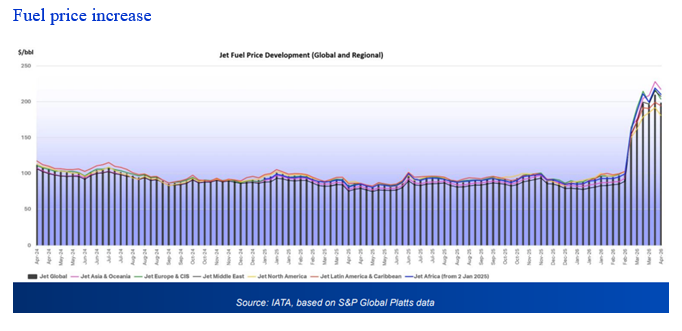
Air freight pricing has shifted back into an upward cycle, supported by tightening effective capacity and rising demand.
Spot rates and charter pricing have surged, with charter rates reaching COVID-era highs due to geopolitical disruptions and urgent demand.
Additionally, fuel costs have become a key driver: jet fuel prices rose 6.0% month-over-month amid supply constraints and geopolitical factors, contributing to increased and highly variable fuel surcharges across carriers.
Rates are expected to remain elevated, with no immediate return to pre-disruption levels.
In a nutshell:
SEA FREIGHT
Shipping activity in the Strait of Hormuz remains drastically reduced despite recent diplomatic efforts in the region.
Only a small number of vessels are currently transiting the passage each day, compared with normal volumes of around 140, effectively leaving the corridor close to a standstill.
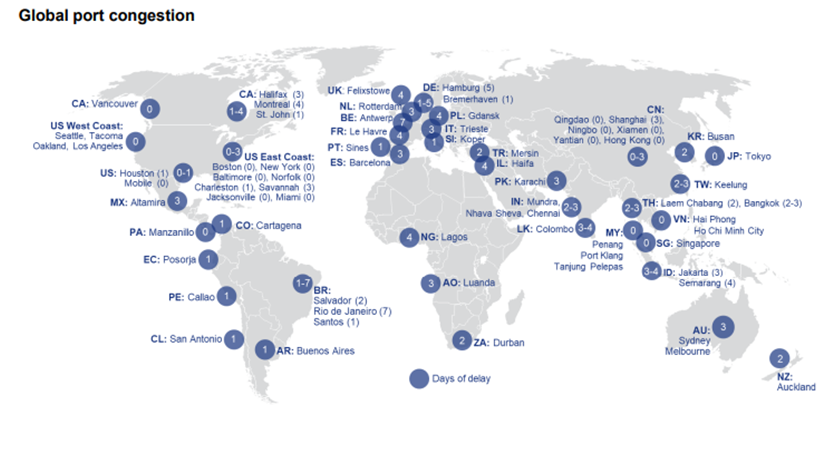
The slowdown has led to a significant buildup of vessels across the Gulf, with ships idling offshore and waiting for safe passage.
A large number of vessels creating bottlenecks that extend beyond the region itself caused by rerouting and service strings adjustments.
As ships remain tied up, available capacity tightens across global trade lanes, affecting schedules and contributing to wider logistical imbalances.
The impact is no longer limited to the region, as delayed vessel rotations and equipment shortages begin to affect schedules on Asia–Europe and transatlantic routes.
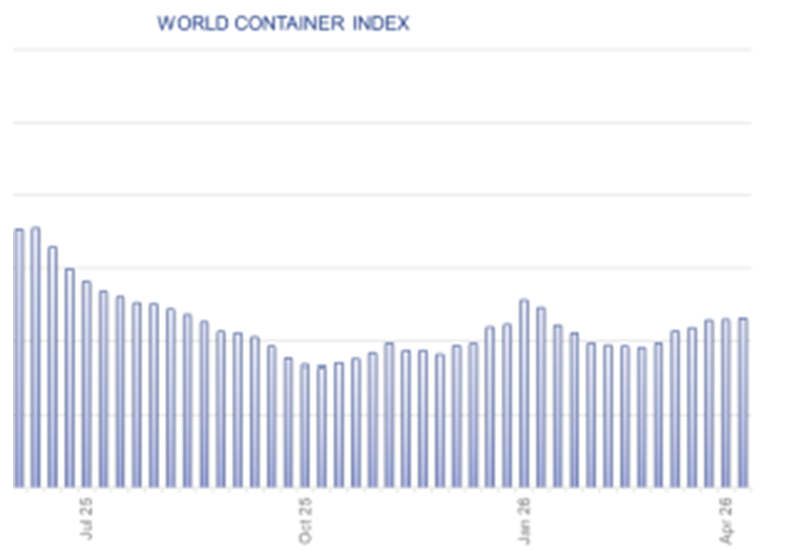
Since the end of February, spot rates on the main shipping routes have increased sharply.
Transpacific routes to the west coast of the United States and transatlantic routes from Northern Europe show increases of over 40%, while the Asia-North Europe and Asia-Mediterranean routes have recorded increases of around 25 to 30%.
Paradoxically, the routes that do not pass through the conflict zone are experiencing the strongest increases.
This is due less to a real tightening of capacity than to two combined factors: a climate of generalized uncertainty among industry professionals; the global application of emergency fuel surcharges, including on routes far from the theater of operations.
Under these conditions, the new increase in the price of oil, following the announcement of the U.S. naval blockade of the Strait of Hormuz, is expected to fuel this cost-driven momentum.
Companies immediately pass on the rise in crude through surcharges across all east-west routes.
It is this factor, and not demand—which remains stable in this post-Lunar New Year period—that is driving rates.
On the Asia–Europe segment, spot rates also seem to be starting a correction in the second half of April.
However, this calm remains fragile: ships are operating at full capacity, and companies are preparing to reduce the number of rotations, which will cause prices to rise again as early as May.
This is the whole paradox of a period caught between opposing forces: on one hand, demand is fragile; on the other, the conflict feeds a cyclical price increase that could long persist...
Key facts:
# A Day in the Life of Gunnar Kay- Production Manager
[Previous article](https://blog.asteelflash.com/blog/a-day-in-the-life-of-gunnar-kay-production-manager?hsLang=en)
# TRANSPORTATION MARKET UPDATE MAY - 2026 | AIR & SEA FREIGHT
[Next article](https://blog.asteelflash.com/blog/transportation-market-update-may-2026-air-sea-freight?hsLang=en)
# We can't wait to learn more about your project
[Contact us](https://www.asteelflash.com/contact/)
[Contact us](https://www.asteelflash.com/contact/)
### Newsletter
Sign up to Asteelflash News below
- [Go-to Solution](https://www.asteelflash.com/go-to-solution/)
- [Design](https://www.asteelflash.com/solutions/design/)
- [Engineering](https://www.asteelflash.com/solutions/engineering/)
- [Intellectual property](https://www.asteelflash.com/solutions/intellectual-property/)
- [Prototyping](https://www.asteelflash.com/solutions/prototyping/)
- [New product introduction](https://www.asteelflash.com/solutions/new-product-introduction/)
- [Mass production](https://www.asteelflash.com/solutions/mass-production/)
- [Lifecycle management solutions](https://www.asteelflash.com/solutions/lifecycle-management-solutions/)
- [Smart supply chain](https://www.asteelflash.com/solutions/smart-supply-chain/)
- [Expertises](https://www.asteelflash.com/our-expertise/)
- [Aerospace](https://www.asteelflash.com/expertise/aerospace/)
- [Automotive](https://www.asteelflash.com/expertise/automotive/)
- [Consumer Electronics](https://www.asteelflash.com/expertise/consumer-electronics/)
- [Defense & Military](https://www.asteelflash.com/expertise/defense-and-military/)
- [Energy management](https://www.asteelflash.com/expertise/green-technologies/)
- [Industrial](https://www.asteelflash.com/expertise/industrial/)
- [Internet of things](https://www.asteelflash.com/expertise/internet-of-things/)
- [Medical](https://www.asteelflash.com/expertise/medical/)
- [Smart Home](https://www.asteelflash.com/expertise/smart-home/)
- [Smart Building](https://www.asteelflash.com/expertise/smart-building/)
- [Telecommunication](https://www.asteelflash.com/expertise/telecommunication/)
- [Wearables](https://www.asteelflash.com/expertise/wearables/)
- [Capabilities](https://www.asteelflash.com/our-capabilities/)
- [Design for Excellence (DfX)](https://www.asteelflash.com/capabilities/design-for-excellence-dfx/)
- [Printed circuit board assembly (PCBA)](https://www.asteelflash.com/capabilities/printed-circuit-board-assembly-pcba/)
- [Box Build](https://www.asteelflash.com/capabilities/box-build/)
- [System Integration](https://www.asteelflash.com/capabilities/system-integration/)
- [Value-added services](https://www.asteelflash.com/capabilities/value-added-services/)
- [Artificial Intelligence for Supply Chain](https://www.asteelflash.com/capabilities/artificial-intelligence-for-supply-chain/)
- [Smart Factory](https://www.asteelflash.com/capabilities/smart-factory/)
- [Startups](https://www.asteelflash.com/capabilities/startups/)
- Library
- [Case Studies](https://www.asteelflash.com/our-case-study/)
- [Electronic Manufacturing Services (EMS) 101](https://www.asteelflash.com/ems-101/)
- [What Design for Excellence Services Mean for PCBA?](https://www.asteelflash.com/what-design-for-excellence-services-mean-for-pcba/)
- [Not all PCBA services are equal — here’s why](https://www.asteelflash.com/not-all-pcba-services-are-equal-heres-why/)
- [Resources](https://www.asteelflash.com/resources/)
- [About us](https://www.asteelflash.com/about-us/)
- [Our blog](https://blog.asteelflash.com/blog)
- [Our Facilities](https://www.asteelflash.com/our-facilities/)
- [Our Locations](https://www.asteelflash.com/our-locations/)
- [Career](https://www.asteelflash.com/our-talents/)
- [Contact us](https://www.asteelflash.com/contact/)
All rights reserved.
[Legal notice](https://www.asteelflash.com/legal-notice/)
[Supply Intelligence Report Q2 – Asteelflash](https://www.asteelflash.com/casestudies/supply-intelligence-material-report-q2-2018/supply-intelligence-report-q2-asteelflash-2/)
-
-
-
-
- [En](https://www.asteelflash.com/)
- [Fr](https://www.asteelflash.com/fr/)