AIR FREIGHT
The air cargo sector could benefit from shippers switching from congested ocean transport to air in the fourth quarter, plus further shifts once there is more clarity on tariffs.
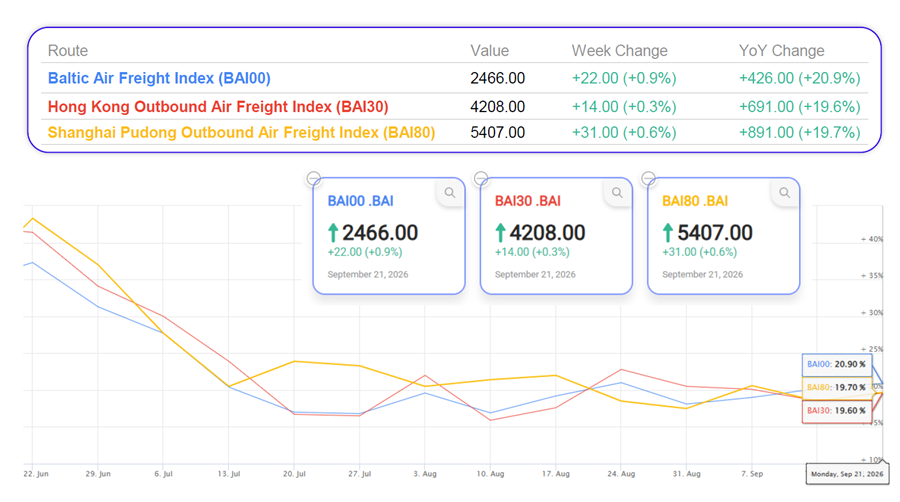
Airfreight rates appear strong as the peak season draws near, with year-on-year gains on transpacific lanes robust while Asia-Europe rates start to recover following the end of the de minimis exemption in the EU.
Jet fuel price increases are also putting pressure on rates: jet fuel rates now up more than double at +116.5% year-on-year (YoY) to September.
EXPRESS CARRIERS
FedEx, UPS, and DHL have now released their 2026 holiday pricing.
The earliest charges began in late September, and most remain in place through mid-January.
Standard per-package increases may look modest.
Across a high-volume parcel network, they add up fast.
These charges are numerous: holiday charges, fuel charges, peak season charges, ….
In other words, there is no single “peak surcharge” to plug into the budget: the real impact depends on when, where and how each package moves.
SEA FREIGHT
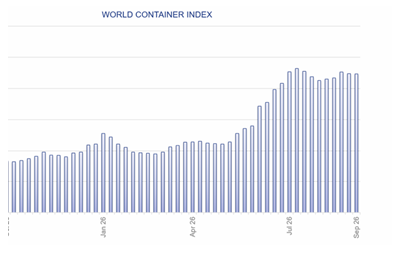
Global container shipping markets remain impacted by a combination of operational disruptions, infrastructure constraints, and geopolitical risks.
While freight rates on the Asia Europe trade continue to soften gradually, congestion, weather-related disruptions, and ongoing uncertainty around key maritime chokepoints continue to affect schedule reliability across major trade lanes.
According to the latest market indicators, carriers remain focused on capacity management.
Studies highlight a compressed holiday calendar, widespread congestion at Asian ports, vessel delays and the return of some Asia-Europe services to Suez Canal routings as key factors shaping current schedules.
As stated above, the congestion at Asian ports has delayed vessels and created double-sailings, bringing previously delayed ships into the Golden Week period alongside regularly scheduled departures.
Once the backlog of delayed vessels clears, capacity levels are expected to normalize.
As a result, shippers should prepare for schedule instability, short-notice voyage cancellations and increased cargo rolling during the latter half of October.
As an example, delays in Shanghai and Ningbo are creating ripple effects across global shipping networks, impacting schedule reliability, transit times, equipment availability, and ultimately cargo arrival planning.
As many organizations prepare for year-end inventory builds and Golden Week disruptions, the greater challenge may not be whether cargo can move, but whether arrival assumptions still reflect operational reality.
What we're seeing:
• Severe congestion persists across major Chinese gateways, particularly in the Yangtze River Delta
• Vessel delays and terminal bottlenecks continue to reduce effective capacity
• Schedule reliability remains under pressure as carriers adjust recovery plans
• Disruption is spreading beyond China, affecting transshipment hubs, equipment availability, and destination operations
What this means:
• Longer and less predictable transit times
• Continued equipment and space constraints despite fleet growth
• Growing risk of irregular arrivals and downstream supply chain disruption
• Increased importance of inventory planning, lead times, and supply chain flexibility